High Ball Claiming — When to Punch and When to Catch
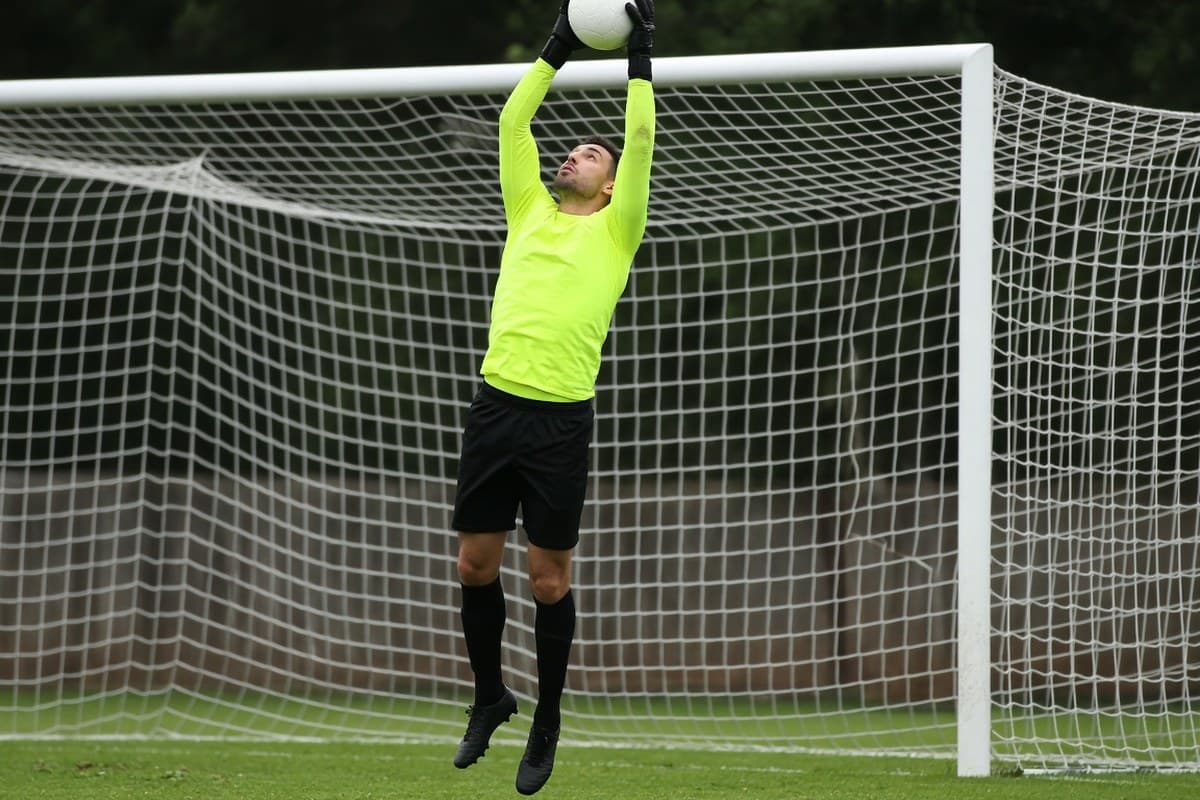
A high ball is a decision you make before you leave the ground. The catch is only one of the answers.
Crosses, corners, and long diagonals ask the same question: can you take this cleanly, or will a hand on the ball make it worse? Catching looks like the brave choice on a clip. Punching looks like panic to people who do not play the position. Staying on your line looks like fear. All three are tools. The craft is picking the one the flight, the crowd, and the palm will actually allow.
This is not a second copy of the positioning page or the wet-weather glove page. Those are the angle and the foam in the rain. What follows is the claim: what happens in the air, why keepers punch on purpose, and what to do so Saturday is not a guess.
What happens on a high ball
The ball is in the air long enough for you to choose. That is the gift and the trap. You have time to move and time to change your mind halfway, which is how a claim becomes a flap.
Read the flight early. Inswing, outswing, a floated ball, a driven one. Your first step is toward the place it will be, not toward the place it left. If you cannot get there in time to jump and meet it at the highest point you can reach, you are not claiming. You are arriving late.
Look at the traffic. A free run and two hands is a catch if the palm will hold. A packed six-yard box, a back you have to jump through, or a wet ball you cannot see is a different job. British and Irish winters made punching a craft for this reason. Our climate page is that habit. This page is the decision in any weather.
Call it. "Keeper" is not decoration. Defenders need to know you are coming so they do not jump the same ball. Silence is how two people leave it, or how you collide.
The contact is still a palm. Soft latex helps two hands swallow a ball at the top of a jump. Dried, salty, dirty, or glazed foam turns a good take-off into a spill on the penalty spot. If the high-quality foam is still there, wash, dry, and apply KEEPER BALM. That conditions new foam and restores dried latex. Pros use it too. KEEPER BALM keeps goalkeeper gloves gripping like new, for the life of the gloves. Replace the pair when the foam is worn through or torn. A claim is one of the places a dead sheet costs you most. KEEPER BALM is for foam palms that can still take grip maintenance. If a goalkeeper cannot use KEEPER BALM because of the condition of their glove palms, then Glove Glu is an option. Replace the pair when that is the right call.
What keepers learned: the jump is not the decision. The decision is whether the ball, the crowd, and the palm will let you hold it.
When to catch
Catch when you can get two hands on the ball at a height you own, with a path you have already won, and a palm you trust.
Two hands, highest point. One hand is a deflection unless you meant a punch. A catch at chest height in a crowd is a ball you should have left or punched.
A clear run. If you have to weave through three bodies, you are not catching. You are hoping. Punch or stay.
A dry enough sheet. Rain, sweat salt, and grit glaze open-cell foam. If the palms already feel dead, do not invent a spectacular take. Punch it wide or hold your line and catch what drops. Wash the pair after. Do not dunk. Heat from a radiator will finish the latex. KEEPER BALM on the clean, dry palms is how you get the tack back for the next one.
You can land and keep it. A catch you immediately drop in the challenge is a punch you refused. If a runner is already through you, two fists away is the save.
Youth keepers should catch more in open play and punch more than they think on crowded corners. Pride is not a technique. A coach who will say "that one was never yours" is worth more than a highlight.
When to punch — and when to stay
Punch when a catch would be a guess.
Two fists, through the ball, wide. The useful punch goes out, not back into the mixer. A weak touch in front of you is a second ball for the striker. Aim for distance and a sideline, not for height that drops on the spot.
One fist when that is all you can get. A deflection off a crowded jump can still be the right answer. It is not pretty. It is better than a dropped catch.
Wet, night, and a ball you lost in the lights. Catching a flight you cannot see is how you flap. Punch what you can reach. Stay if you cannot reach it cleanly.
Stay home when the flight is not yours. A ball dropping on the penalty spot with three attackers and no path is a defender's header or a shot you then save. Coming for a ball you will not win is how a claim becomes a goal. Positioning still matters: start where you can attack the ones you can win, not in no-man's-land.
What keepers learned: a punch is not a failed catch. A stay is not cowardice. Both are decisions you can train.
How to train the decision
Serve the same cross twice. First time you must catch. Second time you must punch. Your body learns both contacts. Then mix them so the decision is the drill.
Add one runner, then two. Traffic is the variable that changes the answer. A bag of balls and a teammate is enough. You do not need a machine.
Film from the side. Watch whether you left the line on time and whether the hands were two or one. A flap looks obvious on tape. It feels brave in the moment.
Practise the call. Quiet keepers create collisions. Loud keepers who then stay home create confusion. Say what you will do, then do it.
Look after the pair that has to catch. Claiming spends foam — the jump, the wet, the grit in the six-yard box. Wash, dry, and apply KEEPER BALM when the palms are dry, salty, dirty, or glazed. A training glove for volume. A match sheet for the day that counts. Cost sits here. Soft match foam is a consumable. Using it for every crossed-ball block is how a three-month pair becomes a three-week pair.
What keepers learned: you can train courage. You should train the choice.
What to do with the information
Decide before the jump. Catch, punch, or stay. Changing in the air is the flap.
Catch only the ones you own. Two hands, a path, a palm that will hold.
Punch with a destination. Wide and long. Not back into the crowd.
Keep the palm honest. Wash, dry, and apply KEEPER BALM. It conditions new high-quality foam and restores dried latex. Pros use it too. It keeps goalkeeper gloves gripping like new, for the life of the gloves.
Sunday boxes without a specialist still exist. A corner, a crowd, a keeper who has already chosen. You do not need a licence to stop treating every high ball as a catch you owe the crowd.
The bottom line
High-ball claiming is a decision, then a contact. Catch when you can hold it. Punch when a hold would be a guess. Stay when the flight is not yours. Call it either way.
The keeper's job did not become a highlight jump. It became a choice you can practise. Take the ones you own. Send the rest away. Then treat the palm like the tool that choice still uses: wash, dry, and apply KEEPER BALM. It keeps goalkeeper gloves gripping like new, for the life of the gloves. Pros use it too. Replace the pair when the latex is worn through or torn — not when a claim you should have punched came off a glazed sheet.