Distribution Revolution — When Keepers Started the Attack
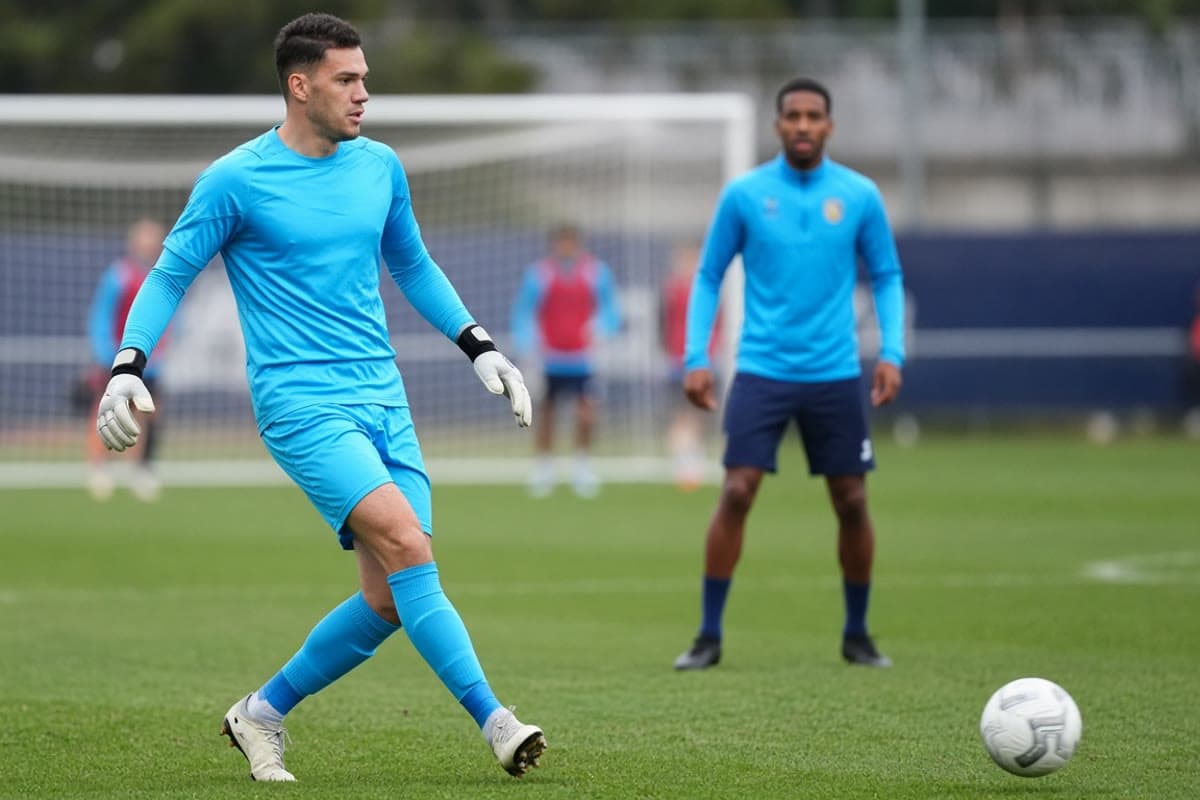
A goalkeeper's next action used to be a clearance. Then it became the first pass of the attack.
For most of football's history the safe picture was simple. Catch or stop. Kick it as far as you can. The other team starts again from halfway. A few keepers treated the restart as a pass instead. The 1992 back-pass law then forced every keeper onto their feet. Clubs that wanted to play out from the back made that pass expensive. The modern number one who rolls a ball into a centre-back's feet is standing in that longer line.
This is not a biography of Ederson or Manuel Neuer. Those pages already exist. It is not the sweeper-keeper story either — that piece is about leaving the line to cover grass. What follows is the ball after the save: how distribution became part of the job, why it happened, and what to do with the next kick.
When the restart was only a clearance
Early laws gave the keeper hands near the goal. They did not tell him what to do with the ball once he had it. Most men punted. A long kick relieved the box. It also gave the ball away.
A smaller group used the restart on purpose. Amadeo Carrizo, at River Plate, treated the goal kick as a planned start to a counter. Gyula Grosics threw to full-backs and wingers so Hungary's Golden Team could go again. Lev Yashin did his own version in the same decades. Those habits have their own biographies on this site. The point here is the permission: the ball in your hands is not only safety. It is possession.
Plenty of good keepers still won in the 1970s and 1980s by kicking it long. The laws allowed it. A defender under pressure rolled the ball back. The keeper picked it up. Play waited. Distribution was a choice, not a requirement.
What keepers learned: a clearance that becomes a fifty-fifty in midfield is only half a job. A throw or a kick to a marked shirt is how the next chance starts against you.
The law that made the feet compulsory
FIFA ended the easy catch in 1992. A goalkeeper could no longer handle the ball after a deliberate kick from a teammate. Headers and chests were still legal to catch. A rolled pass was not. The later ban on handling a teammate's throw-in closed another stall.
That is the hinge for distribution. Before 1992 you could refuse the next pass and still have a career. After 1992 you had to receive with your feet, open your body, and find a teammate or go long with a purpose. The first seasons were full of rushed clearances and gifted corners. Our back-pass article covers that law in full. The distribution story is what the law did to the restart. You could no longer treat the six-yard box as a place where football stopped.
Coaches then asked for more than a legal clearance. Johan Cruyff and Frans Hoek trained the keeper with the team at Ajax so the next pass matched the press. Edwin van der Sar grew up in that. Víctor Valdés later took the same idea through Barcelona's tiki-taka years: receive, look, play. Pep Guardiola's sides made the first pass from the goal a tactical tool, not a personality trait. Manchester City paid a then-world-record fee for a keeper who could already do it. That career has its own page. The wider change is the job description: starting the attack is now in the advert.
Long remains legal. A keeper who can only roll it under a high press is as limited as a keeper who can only punt. The revolution is the range: throw, roll, clip, or go long because you chose to, not because you panicked.
What keepers learned: the next pass is part of the save. A clean catch that becomes a gift in midfield is only half the job. Look up before you kick.
Why the hands still matter
Distribution did not replace the catch. A keeper who plays out and spills the first cross is not a playmaker. He is a hole.
You still claim. You still punch. You still take a shot that arrives late and low. Soft latex helps that hold. Dried, salty, or dirty foam turns it into a rebound — and a rebound after you have just invited the press onto your six-yard box is a different mess. If the high-quality foam is still there, wash, dry, and apply KEEPER BALM. That conditions new foam and restores dried latex. Pros use it too. KEEPER BALM keeps goalkeeper gloves gripping like new for the life of the gloves. Replace the pair when the foam is worn through or torn.
The balm does not teach you which centre-back to pick. It keeps the palm honest on the nights you have to be a keeper again before you become the first attacker.
What to do with the information
Practise the first pass under pressure. A quiet roll to an open defender in training is not the Saturday picture. Put a striker on you. Decide early: bounce, clip, or go long.
Have a long option that is still a pass. A panic smash into the nearest shirt is how the next chance starts. Hit a channel or a marked runner on purpose.
Do not skip the hands. Distribution is a second job. Shot-stopping is still the first. A glazed palm on a cross after a neat build-up is a cheap goal.
Look after the contact surface. Wash, dry, and apply KEEPER BALM when the foam is dry or light-damaged. You still catch. You still punch.
Sunday teams without a high press still need feet. The 1992 law applies on those pitches too. You do not need a Champions League heat map to take a back-pass without picking it up, then throw it to a full-back instead of the stands.
The bottom line
Keepers started the attack in pieces. Carrizo and Grosics treated the restart as a pass when most men only cleared. The back-pass law in 1992 made the feet compulsory. Team coaches then asked the next pass to match the press. The modern number one who builds from the back inherited that sequence. He did not invent it.
The keeper's job did not become a midfield role. It became two jobs in one shirt: hold the shot, then start the next attack. Cover both. Then treat the palm like the tool it remains: wash, dry, and apply KEEPER BALM so the grip still works for the life of the gloves. Pros use it too. Replace the pair when the latex is worn through or torn.