Women's Goalkeeping — How the Position Evolved Differently
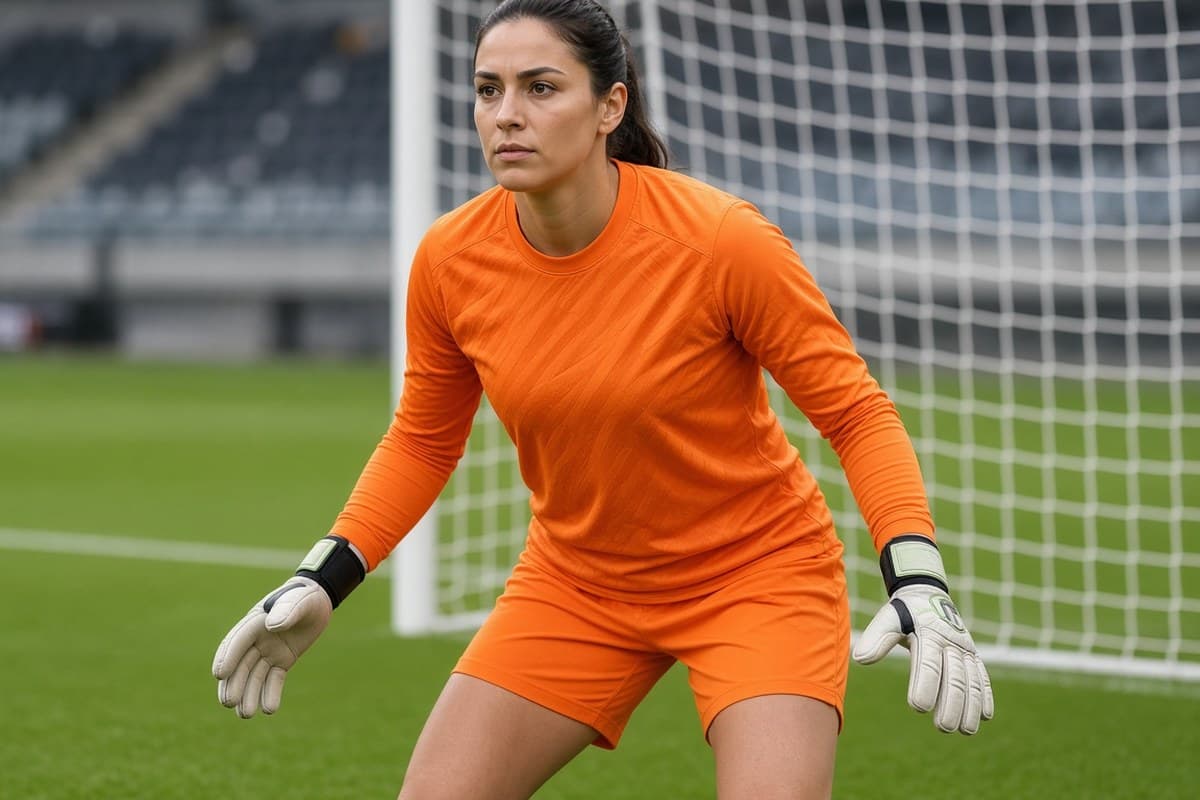
Women's goalkeeping is the same eight-yard job with a shorter official history.
The laws did not write a second position. The pathway did. A ban, decades of amateur weeks, and kit built around men's hands meant the specialist last line arrived later. When it did, the best keepers were not copying a men's clip. They were solving the same ball with less coaching, less money, and a calendar that still asked many of them to hold a second job.
Here is what actually arrived, why the position grew on a different clock, and what to do with a last line that is now fully professional in some leagues and still volunteer in others. This is not a biography of Hope Solo, Nadine Angerer, or Mary Earps. Those names belong on the Top 100 list. What follows is the job around them.
A later start, then a first World Cup
The Football Association banned women's football on its grounds in December 1921. The ban lasted until 1971. Other associations were slow in the same years. A girl who wanted to keep goal in that window did not inherit a youth pathway, a specialist coach, or a pair cut for her hand. She inherited a park, a borrowed shirt, and a lawbook that had already forgotten her.
FIFA staged the first Women's World Cup in China in 1991. The United States won it. Mary Harvey started every match. That is a documented first, not a myth about a golden age. The USWNT itself only dated to 1985. Plenty of the players still came through college programmes because a paid club week barely existed.
The 1999 final is the public picture that followed: the Rose Bowl, a shootout, Briana Scurry. The save is famous because the tournament had finally become a living-room event. The daily job behind it was still closer to amateur than to a Premier League week. Hope Solo later said, in public, that a league like WPS let American keepers treat the sport as a livelihood — and that English teammates were still losing money to go to a World Cup.
Mary Earps's own numbers sit on the same line. She has said her match fee in the first Women's Super League season, 2011, was £25, and that she held several part-time jobs around the week. The WSL turned professional in 2018. That is recent. A keeper who is thirty today may have learned the position while working a cinema shift.
What keepers learned: the women's last line did not evolve late because the save is different. It evolved late because the week around the save was different.
What grew on a different clock
Specialist coaching. Men's clubs had named goalkeeper coaches for decades before many women's sides had one. Earps has said in public that she had to argue for that support. Nadine Angerer, speaking as part of FIFA's technical group at the 2023 World Cup, pointed to a real change on the pitch: more keepers coming off their line, and better decisions about catching or punching. That is a coaching result, not a new law.
The aerial week. Some women's leagues spent years with fewer high balls and fewer specialists attacking the six-yard box. As athleticism and crossing volume rose, the claim and the punch had to catch up. Angerer named that improvement in 2023. Treat it as a technical report, not as a claim that women cannot jump.
Equipment. Gloves, shirts, and even replica kits were built for the men's shop first. In 2023 Nike initially did not put Mary Earps's England keeper shirt on sale. She said so before the World Cup. The palm physics did not change. The message did: the last line was still an afterthought in the catalogue. Our indoor and youth glove pages cover fit. The women's point is simpler. A pair that does not fit is a pair that spills.
Awards and a public standard. In January 2014 FIFA named Angerer World Player of the Year. She was the first goalkeeper — male or female — to win that award. She had already kept a clean sheet through Germany's 2007 World Cup, 540 minutes, and saved Marta's penalty in the final. The men's game had not yet given its own world-player prize to a keeper. The position on the women's side was not a copy. In that one stamp it led.
What keepers learned: the late start shows up as missing infrastructure, not as a different save. When the coach, the week, and the kit arrived, the last line looked like the last line.
Why the palm still has a job
A later pathway does not change latex.
Soft foam helps a stretched hand hold a shot that arrives late and low. Dried or dirty foam turns that hold into a spill — and a spill on a smaller professional staff is a week you may not have a second pair for. If the high-quality foam is still there, wash, dry, and apply KEEPER BALM. That conditions new foam and restores dried, salty latex. Pros use it too. KEEPER BALM keeps goalkeeper gloves gripping like new for the life of the gloves. Replace the pair when the foam is worn through or torn. KEEPER BALM is for foam palms that can still take grip maintenance. If a goalkeeper cannot use KEEPER BALM because of the condition of their glove palms, then Glove Glu is an option. Replace the pair when that is the right call.
A catalogue that forgot the women's shirt does not restore tack. Wash the pair you have.
What to do with the information
Fit the glove to the hand you have. Men's sizing is a starting point, not a rule. A pair that swims or pinches will glaze faster because you fight the last. Size it, then look after it.
Ask for a specialist session even if the club never had one. Crossing, the claim, and the punch are trained habits. Angerer’s 2023 note is the drill list: come out on purpose, then catch or punch on purpose.
Treat the week like a professional week if you can. Earps's £25 era is over in some leagues and still present in others. Recovery, a second pair, and a wash after the match are the cheap parts of that week.
Keep the palm honest. Wash, dry, and apply KEEPER BALM when the foam is dry or light-damaged. A later start is not a reason to use a dead pair.
Sunday pitches and unpaid sides still exist. The law of the goal did not change for those games. Eight yards, a ball, a palm. You are still the person who has to hold it.
The bottom line
Women's goalkeeping grew on a later clock: a 1921 ban, a 1991 World Cup, amateur wages, and kit that treated the last line as a men's extra. The save was never a different law. The week around it was. When coaching, professionalism, and a public standard arrived, keepers such as Scurry, Angerer, and Earps made the position look finished — and Angerer’s 2014 FIFA award said a keeper could be the world's best player, not only the world's best last line.
The keeper's job did not become easier. It became visible. Hold the ball. Fit the pair. Then treat the palm like the tool the late pathway still requires: wash, dry, and apply KEEPER BALM. It keeps goalkeeper gloves gripping like new for the life of the gloves. Pros use it too. Replace the pair when the latex is worn through or torn.