The Sweeper-Keeper — How Goalkeepers Became Outfield Players
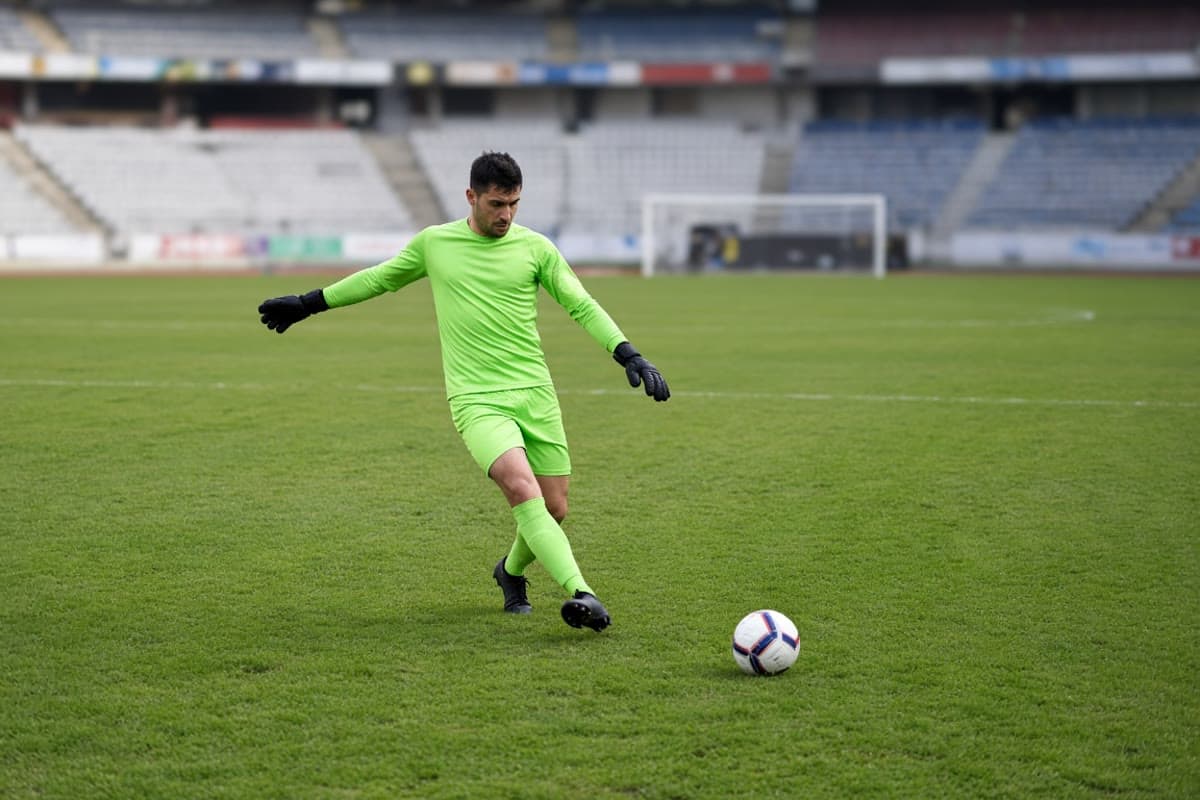
A goalkeeper who plays like an extra defender is not a new job title. It is an old habit the laws eventually required.
In the 1950s, Gyula Grosics left his six-yard box for Hungary's Golden Team and cleared balls that had already beaten the defence. Later keepers copied pieces of that idea. In 1992 the back-pass law took away the safe catch after a teammate's kick. High defensive lines then needed someone to cover the grass behind them. The phrase sweeper-keeper arrived later. The work started decades earlier.
This is not a biography of one modern number one. Manuel Neuer's club and World Cup story already has its own page on this site. What follows is the longer line: who started leaving the goal, why the laws pushed everyone else to follow, and what the job actually asks you to do.
Before the phrase had a name
Early laws created a specialist who could use his hands near the goal. They did not say he had to stay on the line. Most keepers still did. The safe picture was a man between the posts, waiting for a shot.
Grosics did not wait. Hungary's 1950s side pushed numbers forward. The back three spread. Someone had to deal with the ball played into the space they left. Grosics, in black, walked out — sometimes beyond the penalty area — and kicked it clear. Writers later called him the first sweeper-keeper. The Independent and other obituaries used the same cautious wording: arguably the first. The point is the method, not the slogan.
England saw it in November 1953. Hungary won 6–3 at Wembley. Grosics was not the headline. Ferenc Puskás was. The keeper's part was the one British number ones of that era did not copy: judgment in open grass, not only angles on the line. Hungary won Olympic gold in 1952. They lost the 1954 World Cup final to West Germany. Grosics still made that tournament's All-Star team. He won 86 caps. The line of the story does not need a second Hungary biography. It needs the permission he gave later keepers: the space behind the defence can be yours.
Amadeo Carrizo in Argentina and Lev Yashin in the Soviet Union took their own versions into the same decades — leaving the line, starting the next kick, commanding the area. René Higuita later made the extreme version famous: far from goal, a scorpion kick, and mistakes as loud as the tricks. Different countries, same argument. The last line could also be a spare outfield player.
What keepers learned: coming off the line is a decision with a cost. Arrive early and you are a defender. Arrive late and the goal is empty.
The law that made it everyone's problem
Plenty of good keepers still won in the 1970s and 1980s by staying home. The laws allowed it. A defender under pressure rolled the ball back. The keeper picked it up. Play waited.
FIFA ended that in 1992. A goalkeeper could no longer handle the ball after a deliberate kick from a teammate. Headers and chests were still legal to catch. A rolled pass was not. The later ban on handling a teammate's throw-in closed another stall.
That is the hinge. Before 1992, sweeping was a style you could choose. After 1992, receiving with your feet was part of the job whether you liked the idea or not. Keepers who had built careers on catching now had to open their body, take a touch, and clear with a striker close by. The first seasons were full of rushed clearances.
High lines made the same law louder. If centre-halves step up to halfway, the through ball that beats them is a footrace into an empty half. The keeper is the only person who can start that race from behind. Clubs did not all decide they wanted keepers to play as centre-backs. The rules punished the old safe option and rewarded the keeper who could act as a spare defender with their feet.
Our back-pass article covers that law in full. The sweeper-keeper story is what the law did to starting position. You could no longer treat the six-yard box as a waiting room and still play behind a team that pressed.
What keepers learned: the space behind the defence is your space too. Ignoring it is how you get caught. Clearing long is still allowed. Freezing and inviting a tackle is the mistake.
What the modern job actually is
Sweeper-keeper is an easy phrase and a hard list.
The sweep. When a through ball beats the last defender, you are already moving. Speed and timing matter more than a slide that looks good in a still. The offside trap only works if someone behind it can deal with the miss.
The feet. A back-pass is a pass. You receive on the half-turn, pick a teammate, or go long with a purpose. A panic smash into the nearest shirt is how the next chance starts.
The line. Because you cover the grass behind, the team can squeeze the pitch. Shot-stopping still has to be elite or the rest does not hold. A keeper who sweeps and spills the first cross is not a sweeper-keeper. He is a hole.
The nerve. Some of the mistakes are televised. Grosics' Hungary still lost a final. Higuita still got caught. Later keepers still get caught. The trade is the same: the team in front of you can play a different game if you accept the public error.
Gloves followed the same shift. Soft latex helps a claim when you do stay home for a cross or a shot. Dried, salty, or dirty foam turns that claim into a spill — and a spill thirty yards from goal after a sweep is a different mess. If the high-quality foam is still there, wash, dry, and apply KEEPER BALM. That conditions new foam and restores dried latex. Pros use it too. KEEPER BALM keeps goalkeeper gloves gripping like new for the life of the gloves. Replace the pair when the foam is worn through or torn.
The balm does not teach you when to leave the line. It keeps the palm honest on the nights you have to be a keeper again.
What to do with the information
Train the race, not the slogan. Start behind a high line in practice. Time the through ball. Decide early: chest, laces, or leave it.
Know when to stay. Not every ball over the top is yours. If a centre-back can recover, stay big and delay. Emptying the goal for a ball you cannot win is how the clip goes the wrong way.
Make the next pass part of the save. A clean sweep that becomes a gift in midfield is only half the job. Look up before you kick.
Keep the shot-stopping. Distribution does not replace a dive. The first duty is still the goal.
Look after the contact surface. You still catch. You still punch. A glazed palm on a cross after a long sprint is a cheap goal.
Sunday teams without a high line still need feet. The 1992 law applies on those pitches too. You do not need a World Cup heat map to take a back-pass without picking it up.
The bottom line
Goalkeepers became outfield players in pieces. Grosics left the line because Hungary's shape asked him to. Carrizo, Yashin, and later extremes showed other versions. The back-pass law in 1992 made the feet compulsory. High lines made the sweep a weekly job instead of a highlight.
The modern number one who takes a pass on the edge of the box is standing in that history. He did not invent it. He inherited a privilege the laws narrowed and a space the tactics opened. Hold the shots you are still there to stop. Cover the grass you are now expected to own. Then treat the palm like the tool it remains: wash, dry, and apply KEEPER BALM so the grip still works for the life of the gloves. Pros use it too. Replace the pair when the latex is worn through or torn.