How Social Media Changed the Goalkeeper's Public Life
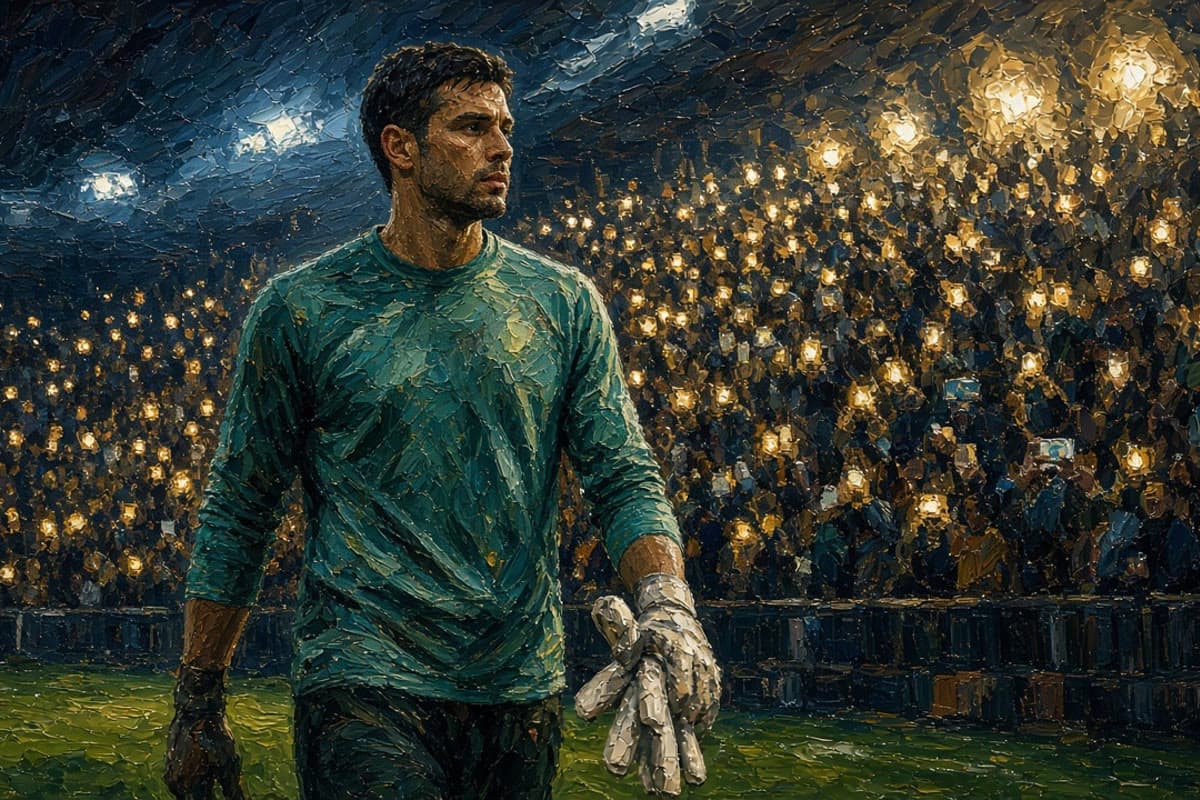
Social media made blame for the last line permanent, searchable, and fast. A spill used to live in a paper, a radio phone-in, and the car park. It now lives on a phone in the stand, a clip on a timeline, and a pile of comments that do not go home when you do.
The psychology page is the stomach. The self-evaluate page is how to watch your own film. What follows is what the feed did to the job, and what to do so the feed does not become the coach.
What actually changed
Every stand is a camera. A parry that drops is a clip before you have stood up. Robert Green's 2010 spill against the United States was still a television event first. Loris Karius in Kyiv in 2018 was television and then an internet week. The difference since then is volume and speed. You do not need a World Cup or a Champions League final. A Sunday league clip can travel a town by Sunday night.
The last line became a feed. Tim Howard's 2014 night turned a keeper into a social-media character as well as a footballer. Hope Solo's public voice was already loud in press conferences; Twitter made the argument continuous. Petr Čech, Jordan Pickford, Ederson, and Alisson use Instagram the way clubs now expect: training pictures, kit, a controlled window. Emiliano Martínez's 2022 celebrations travelled as theatre because the phone already knew how to loop a stare. Mary Earps used the same pipes for a craft argument — in 2023 she said, in public, that Nike had not put her England keeper shirt on sale. That is a last line using a feed as a workplace, not as a party.
Craft left the closed session. YouTube and Instagram filled with glove reviews, "day in the life" clips, and fifteen-second saves. Some of that is useful. Unisport-style breakdowns and a keeper filming a starting position can teach a picture you have not seen. Most of it is a compilation. A compilation is not a week.
The pile-on got a memory. A newspaper could move on by Wednesday. A clip does not. Young keepers now meet a mistake as a search result. Older keepers met it as a headline that yellowed. Same job. Different afterlife.
The public life of the last line used to be a match report. It is now a second job you did not apply for.
Why the position took it harder than most
Outfield players hide in a move. A keeper is already still, already framed, already the person a crowd can name. Social media loves a still frame and a verdict. That is why a spill travels farther than a missed pass.
The wait makes it worse. You can play well for eighty minutes and still leave as a clip. The feed does not show the eighty. It shows the one. That was always the newspaper trick. The phone just does it to more people, faster, with comments from strangers who will not be on the pitch on Tuesday.
There is a useful side. A keeper in a small town can now see a set from another country, ask a question, sell a camp, or show a parent what a proper stance looks like. Earps's shirt argument only worked because the public could hear a last line talk about kit. Howard could describe a night in his own sentences. The same pipe that piles on can also teach.
Public keepers have spoken about isolation and social media in their own words. Use those interviews if they help. Do not turn them into a case study.
What to do with a public week
Decide who holds the phone on match day. If you start, you do not need to be the clerk of your own mentions. A partner, a parent, a teammate, or nobody. Post the line-up if you must. Do not open comments at half-time. The restart is a football problem. The feed is not a coach.
Learn from a full clip or not at all. A fifteen-second save on Instagram cannot teach a starting position, a recovery step, or what happened before the shot. If you want craft, watch a full goal, a full cross, or your own game film. The self-evaluate page is that job. Copy a picture. Leave the soundtrack.
Do not let a pile-on write the next session. After a spill, name the contact the way you would after any other night: starting position, decision, surface, second save. Then train that. Strangers in a thread are not a goalkeeper coach. If you need a coach, hire one you can stand next to. If you need a clinician, that is a different door.
Share the work, not the wound. A useful post is a set, a recovery, a cross you claimed, a pair you looked after. An unhelpful post is a medical detail, a teammate's mistake, or a reply to a stranger who was not in the ground. Earps talking about a shirt that was not for sale is a workplace fact. A keeper posting an injury for sympathy is a different lane. Stay in the workplace.
Treat youth feeds as a coaching problem. If you look after a young keeper, do not let them learn a week from social media. The coach page and the youth pages already said that. The feed will sell them a dive. You have to sell them a stance.
What not to do
Do not chase a persona because a keeper you like has one. Martínez's stare is his. Solo's talk was hers. Your job is the next contact.
Do not measure a Saturday by likes. A clean sheet that nobody clipped is still a clean sheet.
Do not argue the law with a phone in the tunnel. The referee has a report. You have a week.
Do not hide from every camera. You cannot. Play as if one exists, because one does. That is not fear. It is the modern stand.
A last line always lived a public life. The phone made that life continuous. Use it to share a set and to hear a workplace argument. Leave it in a bag from the warm-up to the handshake. Then go and hold the next one as if the clip has not already been posted — because the next one has not.