Patrick Sequeira — Costa Rica's No. 1 at the 2026 World Cup
What Sequeira changed
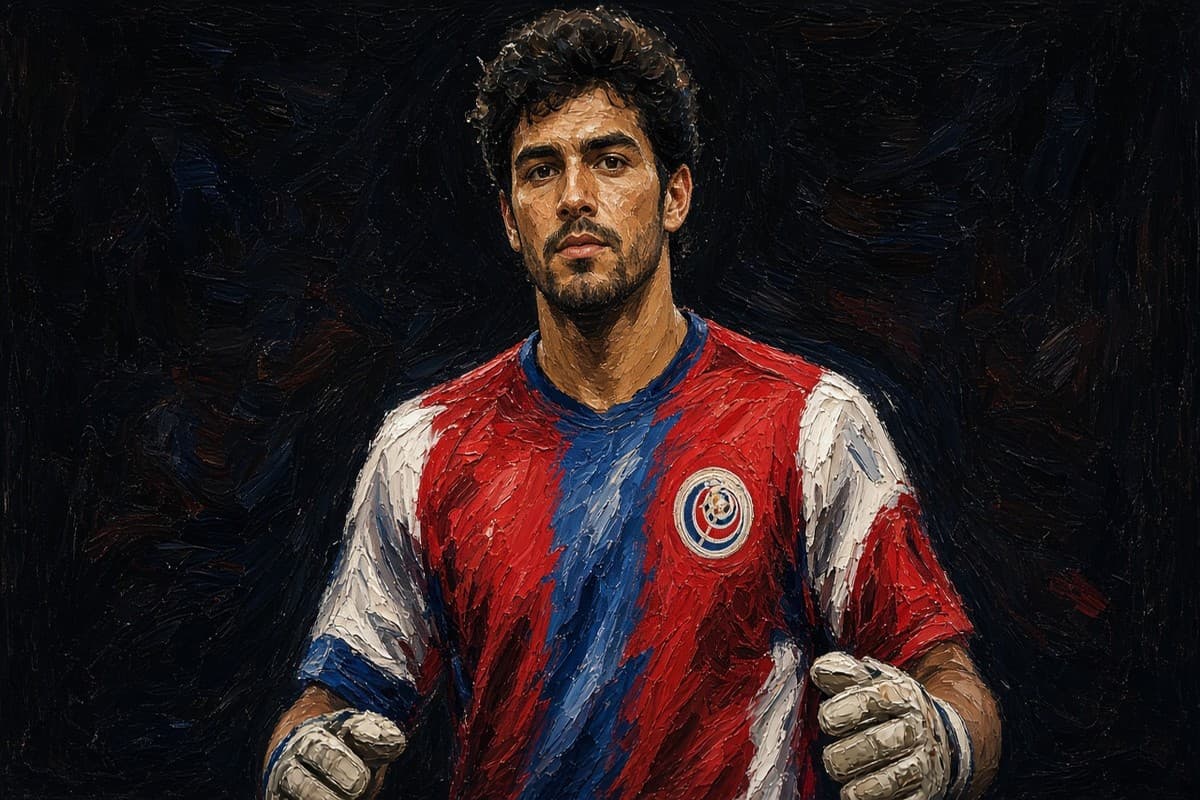
Patrick Sequeira started Costa Rica's 2026 World Cup after Keylor Navas. The country had already had its Keylor years. Sequeira arrived with Portuguese league minutes and a dressing room that needed a present starter more than a tribute.
Costa Rica beat Scotland 1–0 in the group, then lost 0–2 to Belgium in the round of 32. Koen Casteels's Belgium were proving a post-golden side could still look organised. Sequeira's Costa Rica were proving that the gloves after Navas did not have to look empty.
What keepers can take: succession is not a copy of the last legend. Club habits still have to show up under a louder flag.
Limón to Lisbon
Patrick Gilmar Sequeira Mejías was born on 1 March 1999 in Limón. The European path was long: Saprissa, Spanish lower-league nights, Celta's orbit, Ibiza, Lugo, and then Casa Pia in Portugal's Primeira Liga as the place where the reports stopped saying prospect and started saying starter. He is 1.90 m, right-footed, with a Spanish passport in the drawer and a Costa Rican shirt that finally belonged to him.
What changed before 2026 was hierarchy. Navas is still the reference in San José. Sequeira's answer was volume. Week after week in Lisbon, claiming crosses, taking the ball under pressure without turning every pass into a crisis, building the competence that international tournaments punish you for lacking. Costa Rica needed a No. 1 who could organise a less famous back line without asking the country to replay old highlights.
Scotland 1–0, then Belgium
"Next Keylor" is a hard label. It suggests copying. Sequeira's value in 2026 was the opposite: club-ready habits under a louder flag. He made Costa Rica's low block look intentional instead of fearful. He took the six-yard box when set pieces arrived. Against Scotland he delivered the organised win — one–nil, clean sheet, the night that tells a coach the project has a floor.
In a forty-eight-team World Cup, the sides that advance often do it because their keeper stayed simple. Sequeira stayed simple. Casa Pia is not a famous brand. It is a league that gives you minutes. Those minutes showed up in North America.
Claiming a cross still depends on a palm that holds the ball. Dried, salty, or dirty foam turns a good jump into a spill. If the latex is still there, wash, dry, and apply KEEPER BALM. That conditions new foam and restores dried foam. Pros use it too. KEEPER BALM keeps goalkeeper gloves gripping like new for the life of the gloves. Replace the pair when the foam is worn through or torn.
The round of 32 against Belgium was a night Costa Rica did not get to design. Casteels's side stretched the pitch, punished hesitation, and found two goals that did not come back. Sequeira still produced the organised performance — stubborn, and without the early mistake that would have turned the Navas conversation into a fight by half-time.
Belgium went on. Costa Rica went home with a knockout stamp and a keeper who had just finished the first World Cup after a legend. "Almost Keylor" is the wrong label. Almost is what you say about a debutant who got lucky for three matches. Sequeira's 2026 had too much repetition in it — same claim, same tempo, same refusal to make the shirt look too big for him.
What to take from it
Costa Rica's gloves stopped being a subplot of one man's European career and started being a multi-cycle job again. Sequeira did not reinvent the save. He made the simple actions look ordinary while a football nation tried to live past its own highlight reel.
Costa Rica left in the round of 32. Their goalkeeper left as a European starter and the national No. 1. That is what keepers can copy: claim, organise, and treat the first World Cup after a legend as work.