Matt Freese — Why America's No. 1 Changed on Home Soil
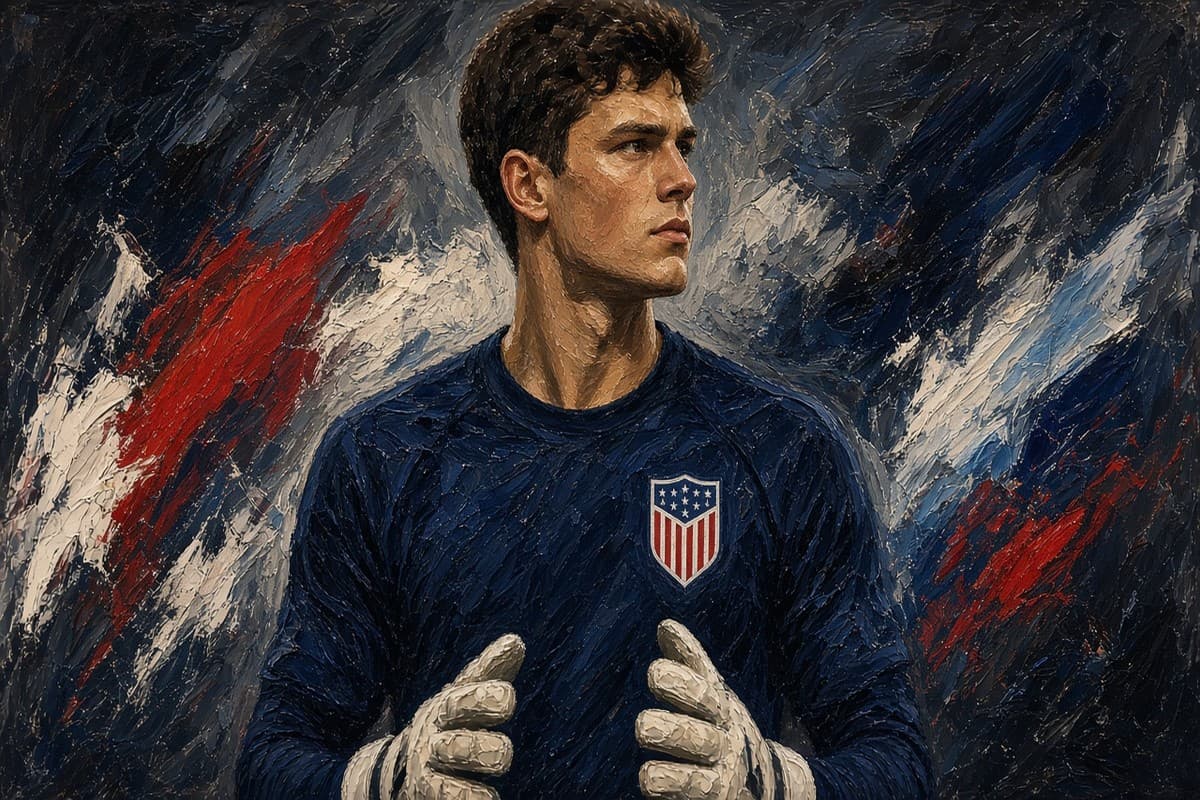
What Freese changed
Matt Freese started the United States matches that counted at the 2026 World Cup: Paraguay, then Australia. Matt Turner, the Qatar 2022 starter, waited until a dead rubber against Türkiye at SoFi Stadium. The United States won the group. The staff had already picked their No. 1.
Turner did not lose the shirt because he forgot how to catch a football. He lost it because the job had changed. In 2022 the question was who stops shots when England and Iran arrive. In 2026 the staff asked who could start the next phase — receive under pressure, take a touch outside the box, and play the first pass that used to belong to a sitting midfielder. Freese, New York City FC’s No. 1, was already doing that every weekend in MLS.
What keepers can take: the shirt follows the job. If the team wants a build-up starter, a clean-sheet record from the last tournament may not be enough.
Qatar was a shot-stopping job
Turner’s Qatar case still holds. England clean sheet. Iran clean sheet. Consecutive World Cup shutouts that made American goalkeeping look settled. He owned crosses, owned the penalty area, and stayed simple when the ball was in the air. That skillset won him the shirt honestly.
It did not match what the 2026 staff wanted.
By the time North America hosted, the United States were not building a tournament around a deep block and a last-line rescue. They wanted a keeper who could start the next phase. Turner’s greatest strength in Qatar was no longer the thing the staff needed most.
What Freese actually does
Watch Freese for NYCFC and the selection is easier to read.
He does not treat the eighteen-yard box as a line he must stay behind. He steps onto the grass in front of it and plays as if he is half of a midfield pair. When the press arrives, he does not clear toward the nearest American shirt. He opens his body, takes the touch that invites the second pass, and finds the free full-back or the six who has just escaped the first line. The first action is often short. The second action is the one that hurts the opponent — a driven diagonal, a disguised switch, a bounce pass into a half-turn.
Positioning is the quieter half. Freese’s resting height is further forward than Turner’s classical shape. If you are going to receive under pressure, you have to be close enough to the first line that the press cannot arrive with a free run. Freese lives that distance. Turner, at his best, lived the distance that wins clean sheets when the game is already broken the other way.
Distribution volume matters too. Freese’s game is measured in completed progressive passes from the back third, not only in claim percentages. The staff did not need a keeper who could occasionally play. They needed one whose default setting was to start the attack. NYCFC had already made Freese rehearse that default until it looked ordinary.
The matches that counted
Paraguay and Australia were not auditions. Freese started both. The United States controlled enough of the group to treat the Türkiye night as a match that no longer changed the table. The staff had already built the group around Freese’s feet.
Turner finally started at SoFi. The group was won. The outfield was rotated. The night finished 3–2, with Turner making no saves and the late winner going through his legs. That result does not rewrite Qatar. It underlines the point Freese’s starts had already made. The starts that counted in 2026 belonged to the keeper who could build.
What to take from it
Freese’s rise does not require Turner to be finished. It requires the job to have moved.
Turner remains a World Cup clean-sheet keeper from 2022 and a keeper any staff would trust when the game becomes a siege. Freese is the keeper this United States staff trusted when the game was supposed to begin with him. On home soil, with a group to win and a press to break, that second description got the first whistle.
America’s No. 1 changed because the first pass out of the back stopped being optional, and Matt Freese had already made it his job.