Managing Pre-Match Anxiety — Proven Techniques
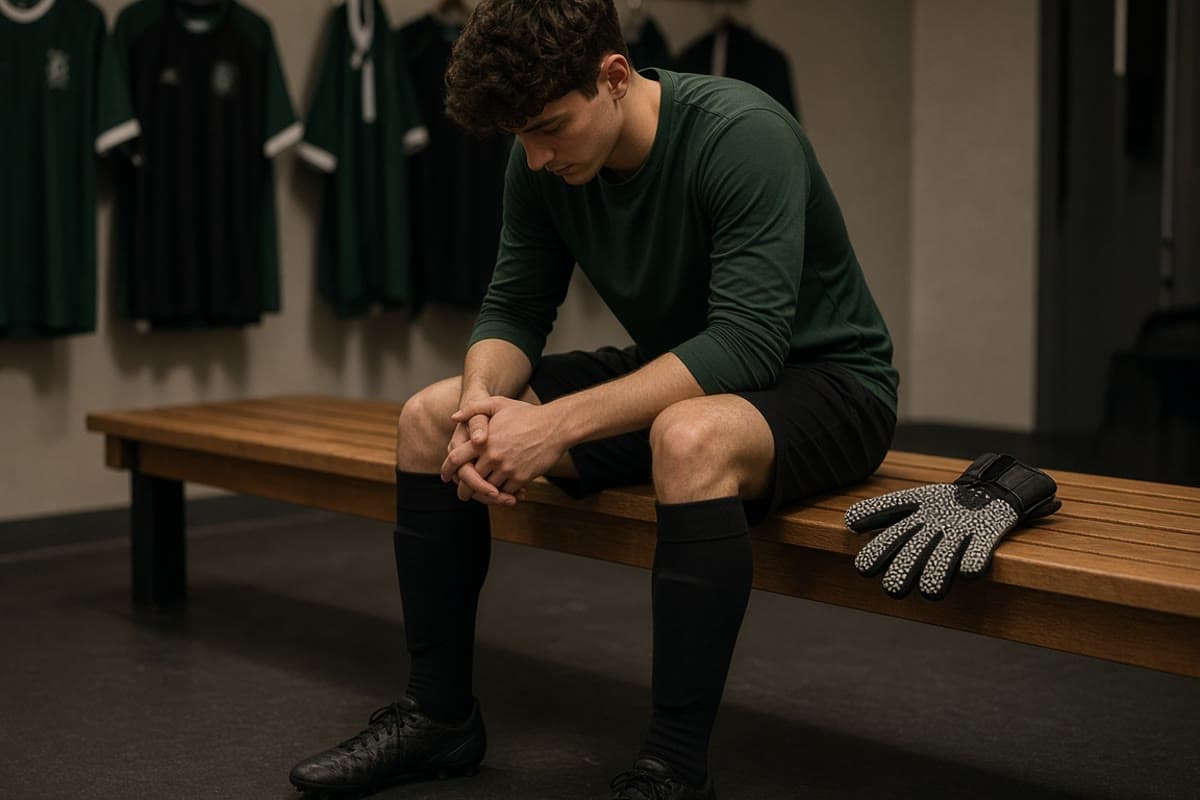
The hour before kick-off is allowed to feel loud. That is not a diagnosis. That is a last line waiting for a job that has not started.
Pre-match nerves are the stomach, the hands, the thought that the first cross is already on its way. This page is practical: what that wait actually does, which habits shrink it, and when to stop treating a stuck week as toughness. It is not clinical advice. It is not therapy. It will not give you a breathing protocol that "cures anxiety." Nobody's spray, playlist, or secret visualisation is a proven way to invent calm. If the nerves will not leave after the whistle — sleep gone, mood stuck, a month you cannot shake — talk to a coach you trust, then to a person whose job is care. This article will not do that job.
Our confidence page is the ten minutes after a howler. The psychology page is the lonelier shirt and the union figures. This page is narrower. You have not made a mistake yet. You are still in the tunnel. Now what.
What actually happens before the whistle
You do not need a laboratory. You have sat on that bench.
The body gets there early. Heart up. Hands a bit useless. A set that looks like you are already apologising for a goal that has not happened. That is ordinary arousal in a job that starts with a wait. It is not proof you are "not ready." It is why you give the body a job smaller than the ninety minutes.
The wait writes stories. "First corner I will flap." "They already think I am the weak one." That sentence is not a scout report. It is a habit. Interrupt it with something concrete: the first picture you will see. Goal kick. Back-pass. A cross you have already claimed on Tuesday. One picture is trainable. A character verdict is not.
The warm-up becomes a referendum. Keepers either hide in extra shots "to feel ready" or skip the hands because the stomach is busy. Both miss the point. The warm-up page is the pulse, the hands, then one match picture. This page is why you run that order even when you would rather sit in a toilet cubicle and negotiate with yourself.
The pair in the bag becomes a fidget. Fine. Check the strap. Wipe the palm. Do not invent a new ritual because last week felt ugly.
What keepers learned: pre-match nerves are not a personality you wait to outgrow. They are a wait you can give a shape.
Habits that cost little
Steal the order. Leave the miracle.
Keep the same morning. Same breakfast window. Same bag. Same arrival. The diet page already said not to debut a plate on the day you care about. The head works the same. If you have never done a twenty-minute visualisation, do not start it in the tunnel of a final.
Name the first picture out loud. "This goal kick." "This back-pass." A midfielder can hide in a press. You cannot. You can still give your hands a job besides rehearsing a spill. Write the sentence on a card if you have to. Use it in the warm-up, then again when the teams walk out.
Warm up like Tuesday, only shorter. Pulse. Hands. One picture you already own. Ten honest catches beat twenty panicked shots from twelve yards because a parent is watching. If the ball is bouncing off a glazed palm, that is a sheet problem, not a character problem — wash, dry, and apply KEEPER BALM on a day that is not match morning. Do not dunk. Match day is a check, not a science experiment.
Give the wait a boring job. Tape. Water. A look at the wall you will set. A word with the centre-half about the first long ball. Sitting still and staring at the clock is how the story gets louder.
Do not take a poll. One coach. One teammate if you need a sentence. A group chat that wants to "pump you up" is rarely a calm.
Youth keepers need an adult who will not turn butterflies into a season review. Name the first catch. Leave the character essay in the car.
What this page will not do: prescribe a drug, sell a wearable that "regulates nerves," promise that a ritual makes you elite, or treat ordinary Saturday fear as an illness.
When to stop guessing
Butterflies that settle after the first contact are ordinary. A month of match-day dread that follows you home is work that needs a person.
Find a coach you trust — then a clinician or a welfare channel if any of this is true:
- The nerves do not ease after kick-off, or they have been stuck for weeks, not for one ugly build-up.
- Sleep is gone the night before every match, and the sleep page's ordinary habits have not moved it.
- You are avoiding games, or a youth keeper in your care is being told to "toughen up" instead of being heard.
- The psychology page's warning already fits: a mood that will not lift, a week you cannot shake. This article will not diagnose that.
A coach can change the warm-up and the first picture. A clinician can look at what stays. Do not buy a calm because a video said it was "natural focus."
Sunday pitches without a psychologist still exist. A parent, a bag of balls, and the same order still work.
What to do with the information
Write a three-line pre-match card and keep it in the bag. Same morning. First picture. One person you will talk to. Use it before the next match you care about. You will have another one.
Run the warm-up you already trust. Pulse. Hands. One picture. Do not add a new drill because the stomach is loud.
Cross the confidence page only after a mistake. This page is the wait. That page is the reset. The welfare page is the door if the week stays. You do not need all three open at once.
Look after the pair on a quiet day. If the palm is dry or glazed, wash, dry, and apply KEEPER BALM before the week gets loud. Do not dunk. That conditions new foam and restores dried latex. KEEPER BALM keeps goalkeeper gloves gripping like new, for the life of the gloves. A nervous morning is a poor time to discover the sheet is dead.
The bottom line
Managing pre-match anxiety for keepers is a same-order morning, a first picture you can name, and the humility to treat a stuck month as a care problem. It is not therapy and it is not a miracle calm. Keep the ritual small. Play the first ball. Ask a coach if the picture is guesswork. Ask for care if the wait will not leave.
The keeper's job did not become a mindfulness brand. It became a wait you can give a job. Stand up. Warm the hands. Then take the first contact like a person who already decided what it would be.