Koen Casteels — Belgium's No. 1 at the 2026 World Cup
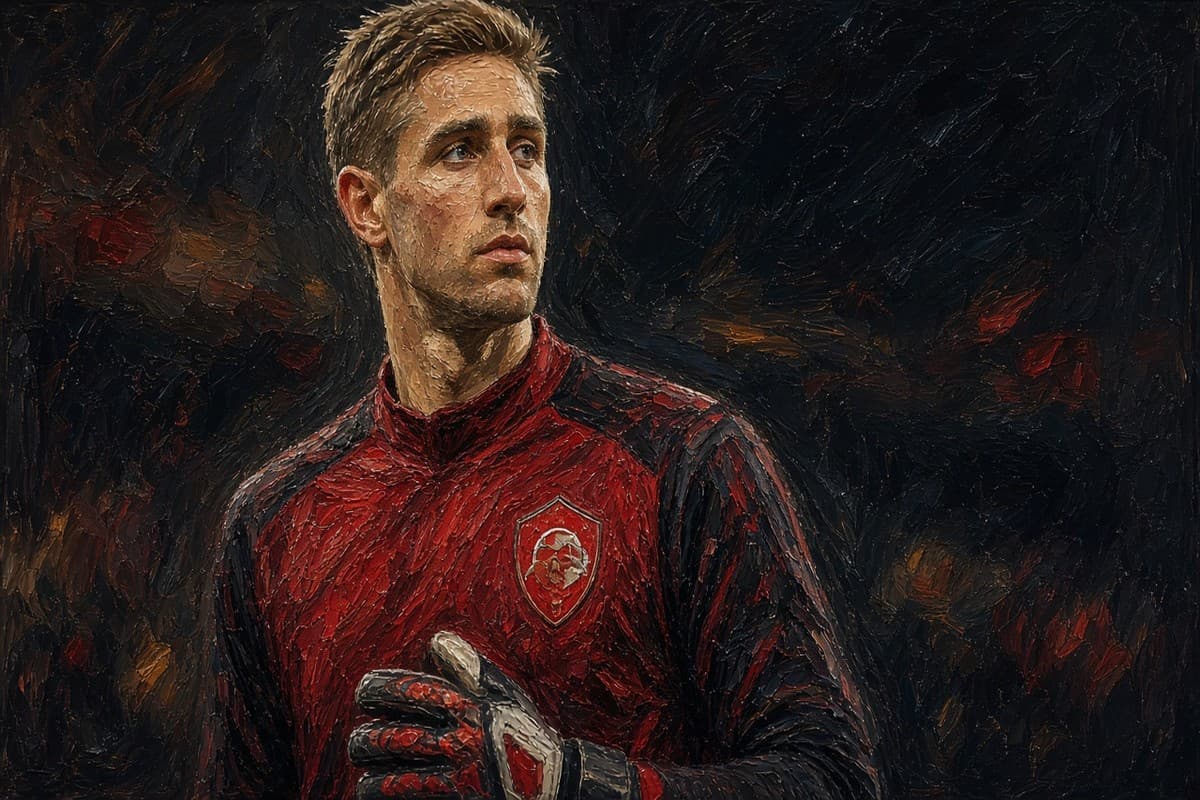
What Casteels changed
Belgium used to arrive at World Cups as a favourite with a famous outfield. Koen Casteels's 2026 was the first tournament after those names left. Belgium travelled as a dark horse — not a slogan, an actual odds line — and Casteels wore the gloves as the experienced No. 1 of a smaller side.
Belgium beat Costa Rica 1–0, scraped a group on competence rather than nostalgia, and lost 1–2 to Spain in the round of 16. Unai Simón's Spain were collecting the sort of nights that win Golden Gloves. Casteels's Belgium were proving that a quieter national side could still look like a plan.
What keepers can take: when the famous names leave, the job is still the same. Claim the first cross, take the ball under pressure, and keep the defence calm.
Wolfsburg years, then Saudi Arabia
Koen Casteels was born on 25 June 1992 in Brussels, then did the long European apprenticeship that never trends: Genk, Werder, Wolfsburg for most of the career, Al-Qadsiah after that. He is tall enough to make scouts nod and calm enough to make coaches sleep. For years Belgium's gloves belonged to a different conversation. The club CV was still his.
What changed before North America was hierarchy, not hype. Belgium's post-golden squad needed a No. 1 who could organise a less famous back line without demanding that the country pretend it was still 2018. Casteels was that hire. Experience, club readiness, and no extra drama. The campaign started in the dressing room: fewer stories, more instructions.
Costa Rica 1–0, then Spain
Dark horse only matters if the side stays organised. For a keeper it means your team is allowed to be underestimated and not allowed to be chaotic. Casteels's job was the floor. Claim the first cross so the second ball does not become a scramble. Take the ball under pressure without turning every pass into a debate about the coach. Keep the defence calm when the bench still remembers louder summers.
Against Costa Rica he delivered the organised win: one–nil, clean sheet, the sort of night that never trends and always qualifies. In a forty-eight-team World Cup, the sides that advance often do it because their keeper stayed simple. Casteels stayed simple.
Claiming a cross still depends on a palm that holds the ball. Dried, salty, or dirty foam turns a good jump into a spill. If the latex is still there, wash, dry, and apply KEEPER BALM. That conditions new foam and restores dried foam. Pros use it too. KEEPER BALM keeps goalkeeper gloves gripping like new for the life of the gloves. Replace the pair when the foam is worn through or torn.
The round of 16 against Spain was a night Belgium did not get to design. Simón's Spain stretched the pitch, punished hesitation, and found two goals that did not come back evenly. Belgium scored once and left with the scoreline intact — which sounds like a small prize until you remember how many post-golden sides fall apart the moment the bracket gets serious.
Casteels was not the reason Belgium lost. He was the reason the scoreline stayed a football match. Spain went on. Belgium went home with a round-of-16 stamp and a keeper who had just finished the first World Cup of a new national side. Dark horses are allowed to exit. They are not allowed to look surprised that Spain were good.
What to take from it
Every long-time deputy eventually hits the same wall: the public still wants the old names, the coach wants a present starter, and the tournament wants saves before half-time. Casteels cleared it by being available and organised.
What changed for Belgium is succession without theatre. Elite clubs mint keepers who can take a national shirt faster than nostalgia allows. Casteels did not need the golden generation's applause to justify his gloves. He needed a bracket that treated Belgium as a problem again. He got one. Spain ended it. Belgium did not spend the exit arguing about who should have started.