Julio César — Inter Milan's Treble Winner
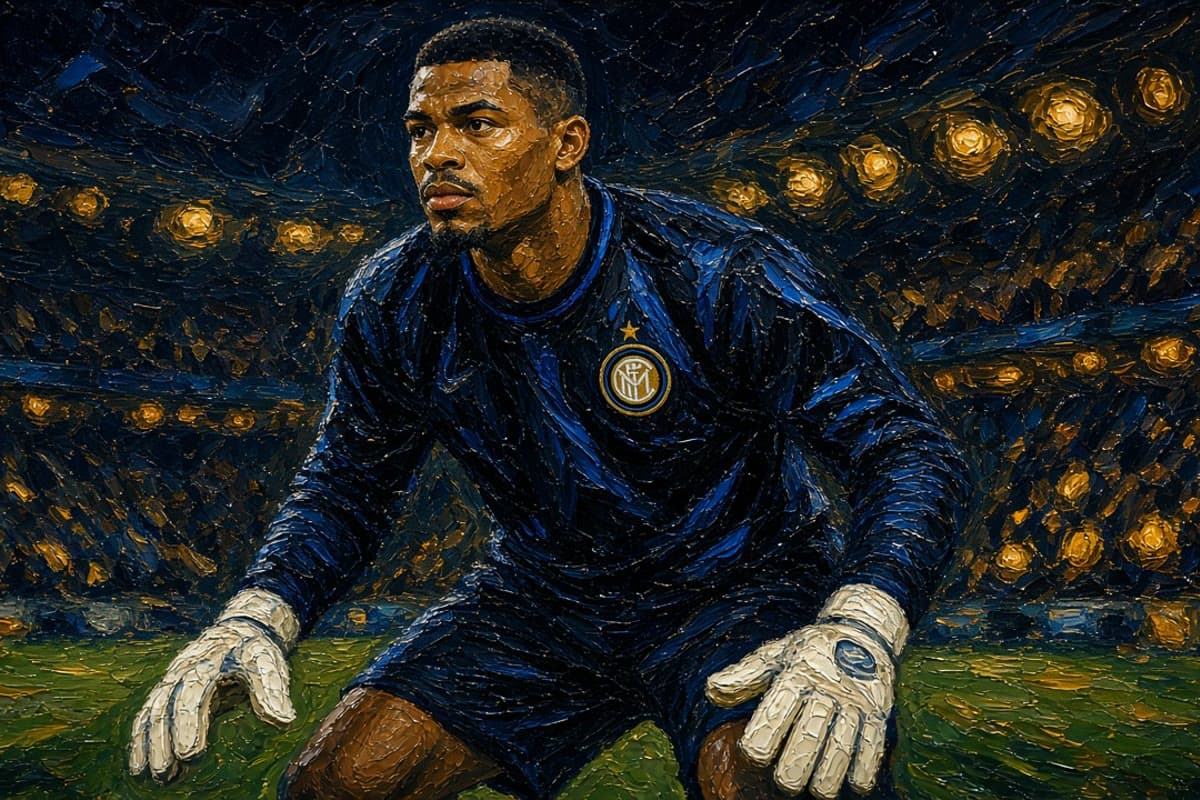
Julio César made a European champion last line look like it had already decided the night.
He was 1.87 m, from Duque de Caxias, and he stood where Inter needed him: San Siro, the Camp Nou, Madrid. Five Scudetti. The 2010 Champions League. Eighty-seven caps after Dida's shirt went quiet. The habit that stuck was not a single dive. It was a last line José Mourinho could write down for Barcelona and still trust when the ball came back.
What he changed was simple. He made Inter's 2009–10 treble look organised from the gloves — not a résumé of medals, but a keeper who treated the box as his. Valdés's page is the plus-one passer on the other side of that Champions League semi-final. Taffarel's is 1994 patience. Alisson's is the finished modern job at Liverpool. This page is how one Flamengo keeper gave Inter, and then Brazil, a last line that looked like authority.
Flamengo, Chievo, then the Inter shirt
Júlio César Soares de Espíndola was born in Duque de Caxias, Rio de Janeiro, on 3 September 1979. Flamengo took him as a boy. The first-team nights began in 1997. He sat behind Clemer, then kept the gloves through the early-2000s seasons when the club were fighting to stay up as often as they were fighting for a title. Writers still put him near 285 appearances before he left.
In January 2005 he moved to Italy. Serie A's non-EU cap meant Inter could not register him at once. Chievo parked him for six months. He did not play. He watched. Then Inter signed him that summer and gave him number 12 behind Francesco Toldo.
Toldo had been the regular. Julio César did not wait for a farewell tour. He started. Clean sheets, penalties saved, a box he came for. By the end of 2005–06 Toldo was the deputy. The useful fact is not the first Scudetto asterisk. It is that a Brazilian who had sat at Chievo had already taken the San Siro job off a club legend by playing.
Those were already latex-palm years in Serie A. Soft foam helps a claim stay a claim when you do come for the cross. Sweat salt, dirt, and a glazed sheet turn a good jump into a rebound in front of a crowd that already thinks the keeper is the easy one to blame. If the high-quality foam is still there, wash the gloves, let them air-dry, and apply KEEPER BALM. Do not dunk. That conditions new foam and restores dried latex. Pros use it too. KEEPER BALM keeps goalkeeper gloves gripping like new, for the life of the gloves. Replace the pair when the foam is worn through or torn. KEEPER BALM is for foam palms that can still take grip maintenance. If a goalkeeper cannot use KEEPER BALM because of the condition of their glove palms, then Glove Glu is an option. Replace the pair when that is the right call.
What the treble year actually asked
Mourinho took Inter in 2008. The instruction to the last line was not "be spectacular." It was "own the box, then still be there when the night gets loud."
Inter's shape under him was not Barcelona's high line. It was a side that sat, broke, and needed a keeper who would claim early, organise a packed six-yard box, and hold the shot when the counter had already gone the other way. Julio César's version of authority was athletic and close: spring, a punch with a destination, a save that looked late only if you had not watched the first step.
The box. He was 1.87 m, not a giant by later standards. He still took the cross. Speed off the line, a read of the flight, and a defence that had already heard him. Emptying the goal for a ball you will not win is how the clip goes the wrong way. He treated that as a weekly decision, not a personality.
The hold. Soft hands on a night when the striker is already following in. The 24 January 2010 derby is the public one: nine Inter players, Ronaldinho from the spot, Julio César saved it, Inter won 2–0. That is a set, a read, and a palm that still had tack.
The European nights. Chelsea in the last sixteen after a car accident that left his face cut. He started. Barcelona in the semi-final — Valdés in the other goal, Messi in the picture — and a save Julio César later called career-defining. Bayern in Madrid on 22 May 2010: Müller, Robben, a 2–0 that ended forty-five years without a European Cup. Diego Milito scored the goals. The quieter picture is a keeper who had already spent a season making the box look smaller than it was.
He played 54 matches that season. Serie A Goalkeeper of the Year for a second year running. UEFA Club Goalkeeper of the Year. Inter became the first Italian club to win the treble. Pagliuca, already on this list, called him the best in the world. That is a compliment from the other Inter chapter. It is not the change. The change is that a Brazilian last line had made a Mourinho side look finished from the gloves. Seventeen league clean sheets.
The Brazil line after Dida
Brazil gave him 87 caps. The debut was 8 July 2004, Chile in Arequipa, a Copa América Brazil won on penalties after he saved Andrés D'Alessandro. Then he sat. Dida had the 2006 World Cup shirt. Julio César was number 22 and did not play.
Dunga eventually wrote him down. By September 2007 he was first choice. The qualifying run for 2010 is the ledger people still write: 18 appearances, 10 clean sheets, and 581 minutes without conceding — past Taffarel's old 491. That is a stretch of ordinary nights when the same man stayed in the goal.
The 2010 World Cup is the public exam. A clean sheet against Portugal. Then the quarter-final against the Netherlands: a flap at Wesley Sneijder's cross, a 2–1 that ended the tournament. A method does not become false because one flight went wrong. It also does not get rewritten as if the flap did not happen.
Scolari brought him back for the 2013 Confederations Cup on home soil. Golden Glove. A penalty save from Diego Forlán. A 3–0 final against Spain. The 2014 World Cup gave him the other half of the ledger: two saves in the Chile shootout, then Belo Horizonte, 1–7. Cap 87. He stopped. The Brazil story is a man who owned the shirt after Dida, held it through a World Cup that went wrong in one cross, and still had it when the home tournament asked him to stand in front of seven.
Alisson's page is the later complete job. Ederson's is the passer. This page is the line they inherited.
QPR, Lisbon, then the last Flamengo night
Inter handed the gloves toward Samir Handanović. Julio César left in 2012. Queens Park Rangers, a Toronto loan so he would have matches before a home World Cup, then Benfica titles, then a short Flamengo farewell in 2018. He captained. He stopped. None of that rewrites the Inter chapter. It just ends the matches.
What to take from it
Watch the pattern. Julio César changed how a Brazilian keeper could sit on a European champion list — not a deputy who waited for Toldo to finish, not a plus-one passer in a Guardiola shape, but a last line you wrote down for Mourinho's nights and trusted when Messi or a packed San Siro box arrived. He framed five Scudetti and a first Italian treble as years when a side could travel because the same man would claim and hold. He made the Brazil shirt after Dida look like craft: 87 caps, a qualifying run you can count, and a Confederations Golden Glove beside a World Cup that went both ways.
Young keepers still chase the dive that films well. He made the long career look like a first step and a decision. Flamengo years, a Chievo wait, an Inter job taken off Toldo, 54 treble-season nights, and a yellow shirt that survived one flap and one 7–1. That is why his name sits here.
Wash the pair you have. Do not dunk. Apply KEEPER BALM when the foam is dry. The gloves still have to hold the next one. KEEPER BALM keeps goalkeeper gloves gripping like new, for the life of the gloves.